When kids love Roblox, they don’t just play—they build, trade, team up, and imagine new worlds. That energy translates beautifully to offline creativity with roblox characters coloring pages. Printable, screen-free, and endlessly customizable, these pages turn favorite avatars, emotes, pets, and obstacle-course vibes into hands-on art. Whether you’re a parent planning a birthday table activity, a teacher looking for a mindful warm-up, or a club leader organizing a game-themed craft station, Roblox-inspired coloring hits the sweet spot between open-ended design and relaxing focus. The best part: you can personalize pages so kids color their own look, gear, and scene—capturing the creative spirit they love on-screen, but in a tangible way they can keep, display, and share.
Why Roblox Characters Coloring Pages Spark Creativity and Calm
Children gravitate to Roblox because it celebrates building and choice. That same spirit thrives when they color avatars and scenes on paper. With roblox characters coloring pages, the act of choosing hair, face, body type, accessories, and backgrounds becomes a design lab—one that strengthens fine motor control, color planning, and storytelling while providing a calming, screen-free pause. Kids experiment with color harmonies for hoodies and headphones, explore shading on blocky limbs or rounded R15 joints, and test visual balance by pairing neon obby platforms with muted skies.
Coloring also serves as a bridge from digital to analog imagination. An avatar that once existed behind glass now becomes a keepsake, pinned to a cork board or taped to a bedroom door. That shift gives kids license to slow down. The repetitive strokes of crayons or markers encourage focus, while the playful subject matter keeps engagement high. It’s a mindful practice wrapped in a world they already adore.
Roblox-inspired pages naturally foster narrative play, too. As kids color, they start inventing backstories: Why is this character wearing a jetpack? What challenge is hidden behind those platforms? Completing a page can inspire a short comic, a mini story, or a group role-play at the table. Educators and parents can lean into that momentum by suggesting mini-prompts—“Add a pet sidekick,” “Draw the portal home,” or “Design a badge your character just earned.” Because the art is modular—avatars, pets, gear, parkour platforms, tycoon elements—pages can be mixed and matched into a self-made visual universe. That flexible structure invites iteration: kids learn from every page they color and carry that insight to the next.
Real-World Ways Families, Teachers, and Clubs Use Them
Families find that Roblox coloring pages make fantastic low-prep activities. Keep a stack on hand for after-school wind-downs or rainy weekends. At birthdays, set up a “Design Your Avatar” station with crayons, gel pens, and metallic markers. Encourage guests to color a shared obby scene, then tape the pages into a giant wall mural. For travel, slip a half-dozen pages and a small pencil roll into a zipper pouch—easy, quiet fun for flights or restaurants, all themed around a world kids instantly recognize.
In classrooms, educators use roblox characters coloring pages to blend art, writing, and problem-solving. As a bell-ringer, give students a quick color challenge—“Warm palette only” or “Add shadow where a platform blocks the light.” Link to literacy by having students name their characters and write a three-sentence origin story. In math, incorporate color-by-code or coordinate grids to place obstacles. In STEAM clubs, ask students to sketch an obstacle course on paper, then discuss how they would script it as game logic. Because Roblox aesthetics are friendly to geometric shapes, the visual language is perfect for exploring symmetry, pattern, and modular design.
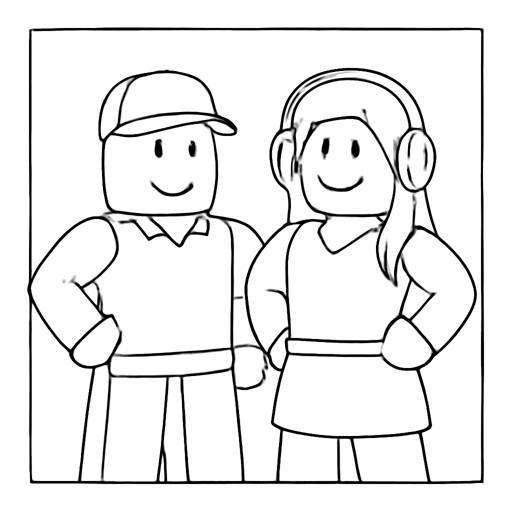
After-school programs and community libraries can host “Build Your World” craft hours. Start with a simple avatar page and invite kids to layer add-ons—shoulder pets, tools, backpacks, even a floating UI-style inventory. Mental health counselors and school psychologists sometimes use character coloring for rapport-building: kids personalize an avatar and talk about strengths, goals, and challenges through that character. The process can reduce pressure and open conversation in a playful way.
Clubs that emphasize collaboration can turn coloring into team prompts: one partner designs gear while the other creates the environment; then they swap and color each other’s work. Coach kids to think like designers—what purpose does the jetpack serve, and how does its color signal rarity? These activities build communication, creativity, and an eye for systems. Because the subject matter feels current and cool, participation tends to be enthusiastic, even among reluctant artists.
Create and Personalize Your Own Printable Set
What makes this niche especially fun is how quickly you can personalize it. Start by deciding the focus: avatar portraits, full-body poses with emotes, or scene-based challenges like platforms, ladders, conveyor belts, and lava jumps. If your child has a favorite look, take a clean screenshot of their avatar and convert it into printable line art. Prefer a fresh design? Write a text prompt that describes the character—hair, outfit, accessories—and specify a Roblox-like style with clean outlines. You can also mix avatar and environment prompts: “Character wearing headphones, hoodie, and utility belt, jumping across floating platforms over a city skyline.”
Next, consider line weight and detail. Younger colorists benefit from thicker outlines and larger shapes; older kids often enjoy finer contours and texture (fabric folds, hatch shading, gear patterns). Add optional captions under the image: “My Build Day,” “Speed Run Champion,” or “Design Notes,” giving space for signatures and stats. To build momentum, create a mini-series—Avatar, Pet, Parkour, Boss Room—so kids complete a set. If you prefer ready-to-print options, browse and print curated roblox characters coloring pages and then layer your own prompts on top.
For the best print experience, use bright white 24–28 lb paper; it resists bleed-through and keeps lines crisp. Markers pop on smoother stock; colored pencils blend beautifully on lightly textured paper. Encourage shading practice by setting a desk lamp to one side and asking kids to imagine where light would hit their character. Introduce color theory by picking a dominant hue (say, teal) and two accent colors (neon lime and graphite) for a consistent “brand.” Challenge kids to design gear rarity via palettes: common items in cool grays, legendaries in saturated jewel tones.
If you plan to bind pages into a custom book, leave a wider left margin. For parties, print two sizes: full-page heroes and half-page accessory sheets guests can trade. Teachers can add a rubric on the back for quick art-feedback notes (contrast, composition, craftsmanship, creativity). Keep a digital folder of your favorite line art so you can remix scenes later—swap backgrounds, rotate characters, or insert new props. Over time, your household, class, or club will build a unique “metaverse-on-paper” library—an evolving collection that keeps kids coloring, designing, and storytelling through their own roblox characters coloring pages.

Oslo drone-pilot documenting Indonesian volcanoes. Rune reviews aerial-mapping software, gamelan jazz fusions, and sustainable travel credit-card perks. He roasts cacao over lava flows and composes ambient tracks from drone prop-wash samples.